
Research tab organization
Research sessions collapse when sources, notes, and reference material all compete in one tab strip. A research workspace needs its own space with vertical tabs for scanning, folders for saved sources, and pins for your note doc.
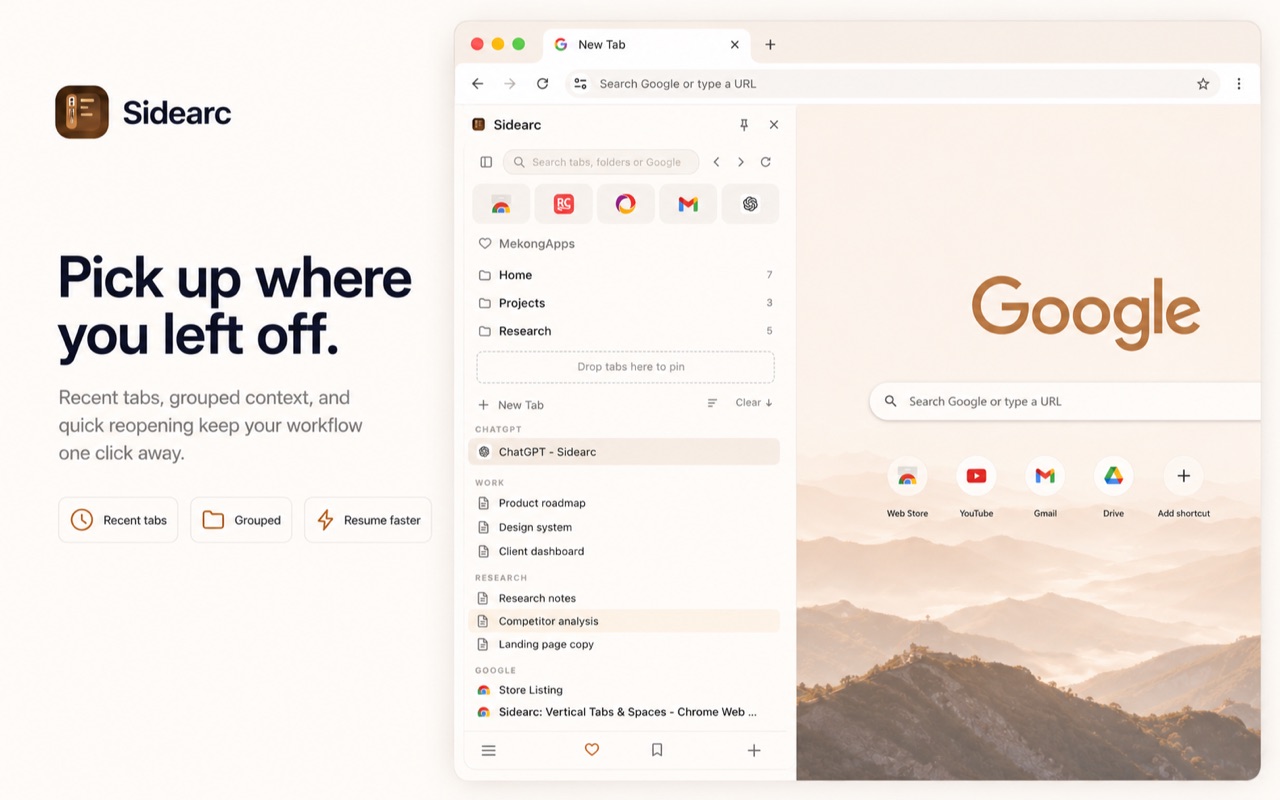
Sources in one space, writing in another. Pin your note doc.
The research tab problem
A typical research session opens 20-40 tabs: papers, articles, data sources, note docs, reference pages, and search results. In Chrome's horizontal strip, they all become tiny favicons. You lose track of what you've read, what's still relevant, and where your notes are.
How to organize research tabs
- Separate collection from synthesis — one space for source gathering, another for active writing
- Pin anchor tabs — your note doc, source tracker, and primary search page stay pinned at the top
- Save sources into folders — group references by topic or subtopic in named folders
- Scan full titles — vertical tabs show the full title of each paper or article, not just a favicon
- Drag to reorder — move the most relevant sources to the top of the list
Why this works better than bookmarks
Bookmarks save individual pages with no structure. Folders should live inside the research space alongside your live tabs. You see saved references and open sources in the same panel, and you can open a saved link with one click without leaving the space.
FAQ
How do I organize research tabs in Chrome?+
Separate source collection from active writing, pin your notes document, and save references into topic folders so you are not juggling everything in one strip.
Why are research tabs harder to manage than normal browsing?+
Because titles are long, sessions get large quickly, and you are often switching between notes, sources, and drafts at the same time.
Can SideArc help with literature review or source-heavy work?+
Yes. It is useful whenever you need clearer scanning, topic folders, and separate spaces for sources versus writing.
Should I keep all research tabs open all the time?+
Usually no. Keep active reading open, pin your notes, and move recurring or completed references into saved folders so the workspace stays usable.