
How to use Instagram intentionally
You open Instagram to reply to a message. Three minutes later you're watching a reel about someone's cat. The problem isn't self-control. Reels, suggested posts, and ads hijack your original intent the moment the feed loads.
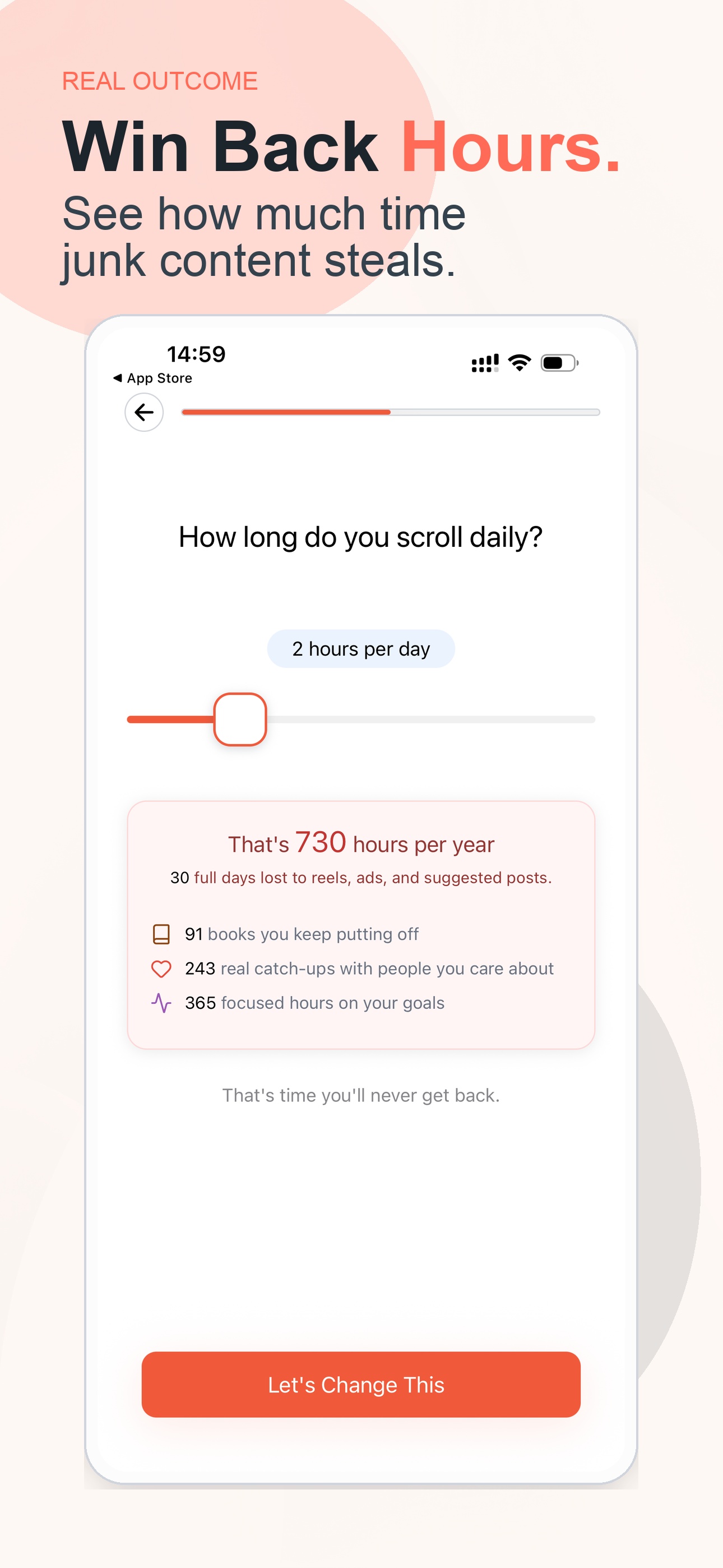
A cleaner feed makes it easier to check Instagram and leave on purpose
Why intention alone doesn't work
Instagram's feed is designed to replace your intent with its content. You open the app to check messages, but reels start autoplaying, suggested posts appear between followed content, and ads extend every session. Within seconds, you've forgotten why you opened the app.
How to make intent stick
Remove the content that competes with your original reason for opening Instagram:
- Block reels. No autoplay video interrupts what you came to do.
- Blur suggested posts. Content from accounts you don't follow stops pulling you off track.
- Remove ads. Sponsored posts stop padding the session.
With a feed filter, the feed only shows posts from people you follow, your messages, and stories. You check what you came for and leave.
What replacement content does
Where suggested posts used to be, a feed filter can show fun facts, quotes, language phrases, or your own custom reminders. These are deliberately less engaging than algorithmic content. They don't start a new scroll loop.
FAQ
How do you use Instagram intentionally?+
Start with a reason to open it, then remove the features most likely to derail that reason. Zen Social helps by stripping out reels, suggested posts, and ads from the experience.
What gets in the way of intentional Instagram use?+
Autoplay video, recommendations, and ad-driven interruptions constantly nudge you away from your original purpose and into passive consumption.
Can intentional use still include messages and stories?+
Yes. Intentional use does not mean giving up everything. It usually means keeping direct communication and chosen accounts while reducing algorithmic distractions.
Why is environment design better than relying on discipline?+
Because discipline has to win every single time, and eventually it won't. Changing the app changes what happens by default, so doing what you meant to do costs you nothing.